
Estimated Reading Time: 6 Minutes
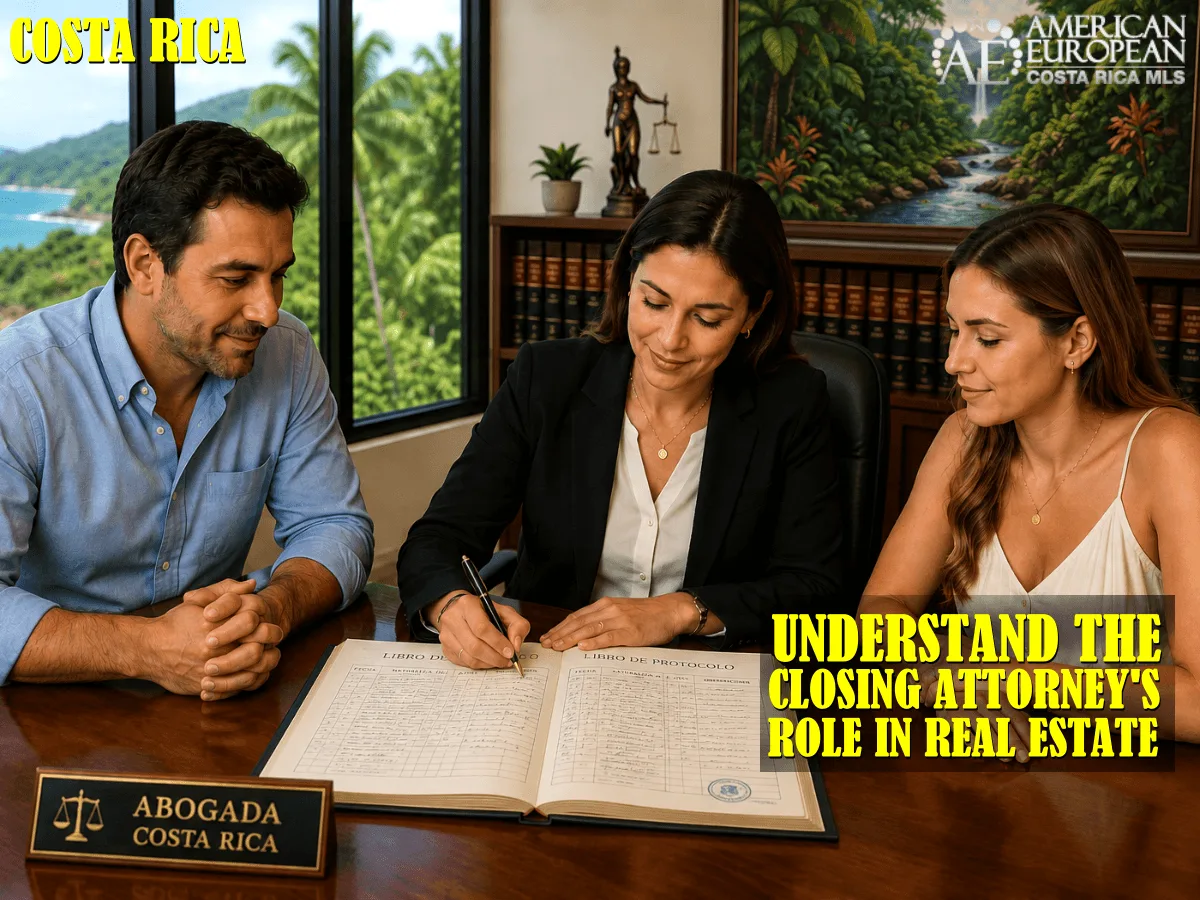
The role of the closing attorney should be clear before every real estate closing in Costa Rica. Each real estate agent works differently, and usually many details are left to the closing attorney. The role of the closing attorney is central to ensuring that a real estate transaction for the property you are buying is legally sound, transparent, and secure for both the buyer and the seller. Unlike in some countries where responsibilities may be divided among several professionals, the Costa Rican closing attorney typically oversees the entire process—from drafting contracts to finalizing the transfer—while safeguarding the interests of all parties involved. Often, real estate agents and attorneys get into a ping-pong match about who is responsible for what. It’s important to understand that the closing attorney must be a notary public to register the purchase-sale deed.
Choose the right Attorney
If you do not speak Spanish at all, there is a good reason to choose an attorney who speaks your language. Then you will be able to communicate effectively throughout the entire process. Too often, I see buyers who speak only English hire a closing attorney who only speaks Spanish. This creates all kinds of unnecessary problems during the process.
And the choice of a closing attorney is not always within the buyer’s power. In a cash purchase, the buyer may choose the closing attorney. The real estate agent can, of course, recommend to the buyer the closing attorney they believe is best to work with. Do yourself a favor and first check our list of trusted awesome closing attorneys.
If the buyer is purchasing with a mortgage from a Costa Rican bank, the bank’s attorney will handle the closing. In owner financing, the seller will want to protect his interests, and generally, two attorneys are involved.
The SPA
One of the first and most important responsibilities is preparing the Sale Purchase Agreement (SPA). This document establishes the legal framework of the transaction, outlining key terms such as the purchase price, payment structure, deposit conditions, closing date, and any contingencies. A well-drafted SPA minimizes ambiguity and provides clear remedies in case either party fails to comply with the agreed terms. The attorney ensures that the agreement reflects local law and protects the client from potential risks.
Title Search
Equally critical is conducting a thorough title search. This involves reviewing the property’s history in the National Registry to confirm that the seller is the rightful owner and has the legal authority to transfer the property. During this process, the attorney verifies that the title is clean and free of irregularities. This step is closely tied to broader legal due diligence, which includes identifying any outstanding debts, liens, or encumbrances attached to the property. These could include mortgages, judicial claims, tax obligations, or utility debts that may transfer to the new owner if not properly addressed prior to closing.
Taxes
An essential addition to this due diligence is verifying property tax (impuesto sobre bienes inmuebles) and municipal tax payments. The closing attorney must obtain municipal certifications confirming that all property taxes and local municipal charges—such as garbage collection or other services—are fully paid and up to date. Ensuring that the seller delivers the property free of outstanding municipal obligations protects the buyer from unexpected liabilities after closing. If the property is owned by a corporation, it’s important to check if the seller is up to date with the corporation tax payments (impuesto a las sociedades anónimas).
As of January 2026, the Solidarity Tax for Luxury Homes in Costa Rica applies to residential, occasional, or vacation homes with a construction value (including fixed installations) exceeding ₡143 million colones
Declaración de Bienes Inmuebles
Closely related is the review of the mandatory declaración de bienes inmuebles. In Costa Rica, property owners are required to periodically declare the value of their property to the municipality. The attorney must confirm that this declaration has been properly filed and is current (less than 5 years). If it has not been submitted or is outdated, the municipality may reassess the property and impose back taxes, interest, or penalties. Ensuring compliance with this requirement protects the buyer from unexpected future tax liabilities. And more importantly, helps confirm that the recorded property value is accurate for tax purposes.
Title Discrepancies
Another essential task is comparing the registered survey map (plano catastrado) with the actual property information in the registry. Discrepancies between these records can create legal complications. Therefore, the attorney must ensure that the physical boundaries and legal description align.
Condominium Property
For properties within a condominium, the attorney also reviews the homeowners’ association (HOA) structure. This includes
- verifying HOA fees,
- analyzing financial statements to assess the association’s financial health,
- reviewing HOA meeting minutes for upcoming assessments or disputes,
- and examining the community’s bylaws.
These documents provide valuable insight into ongoing obligations and potential risks for the buyer.
Land Transfer
When the transaction involves land rather than a developed property, additional due diligence is required. The attorney must obtain zoning information from the local municipality to confirm what type of development is permitted. If a river is present on or bordering the property, it is necessary to determine legal setbacks and restrictions imposed by environmental regulations. Furthermore, confirming the availability of essential utilities, such as water and electricity, is crucial. A lack of access to these utilities can significantly affect the land’s usability and value.
The Deed
As the transaction progresses toward closing, the attorney prepares the transfer deed (escritura de traspaso), which formalizes the change of ownership. This document must be executed before a notary public and then registered in the National Registry to complete the transfer legally. In addition to document preparation, the attorney plays a key role in controlling the flow of funds. This typically involves coordinating with an escrow company to ensure the buyer’s funds are held securely and released only after all contractual and legal conditions are satisfied. Upon closing, the attorney instructs the escrow agent to disburse funds to the seller and any other parties, such as lenders or tax authorities.
Title and Due Diligence Documents
What happens to your title documents after the closing? In most cases, everyone forgets to follow up on the title documents. This Tico Times reader had a good reason to be so lost. These title documents are needed as proof when you or your heirs want to sell again.
Usually, title registration takes about a week. But if not, give it 30 days and then call the closing attorney to request the following documents:
A title report that shows that you or your corporation owns the property
Copy of the deed stamped by the National Registry
Add those documents to all the others mentioned in this article, put them in one or two 12 x 9-inch envelopes, and put the name “Costa Rica Property Documents” on them. Please keep them in a safe place.
Last but not Least
It is important that the buyer receives a title report from the closing attorney as soon as the property is registered in the National Register in the new owner’s name.
In conclusion, the closing attorney in Costa Rica acts as the cornerstone of a real estate transaction. By managing legal documentation, conducting meticulous due diligence, verifying regulatory compliance, and overseeing the secure transfer of funds and title, the attorney ensures the process is both efficient and legally protected. Their expertise not only reduces risk but also provides peace of mind to all parties involved in the transaction.
If you or someone you know needs expert assistance in buying a property in Costa Rica, we appreciate your referral. Feel free to comment on this blog and share this article on your social media. Would you like to learn more about buying property in Costa Rica? Then request a Zoom meeting with me now.